(25.04.2014) Looking for Autumn. The Bright Autumn Festival.
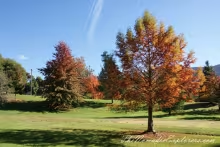
Australia doesn’t do autumn. Not really. But happily there are a few lovely cool climate towns where deciduous trees come out to play and paint the town red, orange and yellow. So what is the best place to see the bright colours of autumn? Of course it is Bright! :)
Bright is a town in the High Country of Northeast Victoria. The town is close to the Victorian Alps, and various alpine national parks including the Mount Buffalo National Park. It is famous with its European trees planted in the area and a major cultural event - the Bright Autumn Festival.
This year we spent two days (25-26 of April) there, exploring this beautiful town and were stunned by the beauty of those tree foliages that had changed their colours.
(26.04.2014) Wandiligong. Maze, Chinese Swing Bridge, Nut Festival

Wandiligong is a quiet community 6 km south of Bright. Its population is about 250 people who work in the apple orchards and small holdings, its cottage industries and in the neighbouring districts. Established in the 1850s during the Victorian gold rush, it was at one stage home to over 1000 people with schools, public library, churches, shops and hotels. Several trails lead down to the diggings turned over in search of gold, which ran out by the end of the century. The whole town is now registered with the National Trust as a historic landscape and features historical buildings such as the Manchester Unity Public Hall (built in 1874), the general store, several churches and a number of quaint cottages.
Main attractions of Wandiligong are Australia’s largest living hedge maze, the largest apple orchard in the southern hemisphere, historic buildings and the Alpine Park, and The Wandiligong Nut Festival. There are several walks as well including the Wandi Wander, Royal Bridge Walk and The Diggings Walk with its Chinese Swing Bridge giving a hint to some of the locals of old.
We visited Wandiligong Maze, walked the Diggins Walk on the first day of your visit and went to the Wandiligong Nut Festival next day.
Kosciuszko National Park Trip - 2013
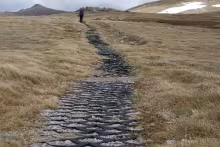
I decided to organise all links and files in this post for those who started reading about our Kosciuszko National Park Trip.
Here are some facts: in Nov 2013 we spent 3 days exploring Kosciuszko National Park. We climbed the highest peak on mainland Australia Mount Kosciuszko, went into Yarrangobilly Caves, walked a lot around Jindabyne Lake and went home via scenic, but very narrow Alpine Way.
(05.10.2013) Australian Garden at Royal Botanic Gardens, Cranbourne
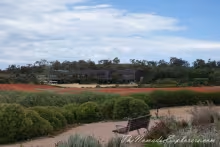
It was a pleasant sunny spring day when we went to the Australian Garden in Cranbourne. It is a place of beauty, enjoyment and education that can be appreciated at several levels – as a celebration of the diversity of Australian plants, as a source of knowledge about our environment and its management, and as a demonstration of sustainable practices for home gardeners. This project for the Royal Botanic Gardens showcases more than 100,000 plants including 1,000 trees, 160 native bird species, 20 native mammal species, 18 native reptile species, 11 native amphibian species over 11 hectares. It is a new Botanical Garden - first section was opened in 2008 and the second one in 2011.
We spent almost a day there exploring heathlands, wetlands and woodlands, reading ALL information signs and discussing them with our son. Absolutelly must visit place for those who enjoys Australian flora and walks.
(09.10.2013) Mornington Peninsula National Park - Cape Schank, Flinders Blowhole
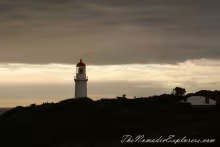
Last spring we went for a short 2h walk to the Cape Schank in Mornington Peninsula National Park. The location was named in 1800 after Captain John Schank, R.N. by Lieutenant James Grant sailing on the Lady Nelson. As you might remember, we visited the Lady Nelson Information Centre in Mount Gambier, where we learned more about the ship and James Grant's journey.
The cliffs at Cape Schanck rise 80 metres above the ocean and the lighthouse rises another 21 metres. From the Cape Schank Light House, there is a board-walk leading down to ocean and a number of walking trails thru parkland to beaches.
We arrived at Cape Schank at 5pm, the lighthouse was already closed, so we went for a walk.
(16.11.2013) Melbourne - Victoria State Rose Garden
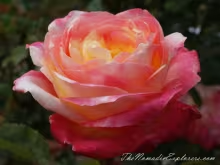
Long time ago when I was spending my weekends with my grand-mum, I loved to read a book about roses. Actually, I loved to look at the pictures of these beautiful flowers, imagine myself being a princess somewhere in England. I grew up and my wish came true: we went to the real rose garden with LOTS of flowers. We spend a half of the day in the Victoria State Rose Garden, Werribee in November 2013 and I was sooooooooo happy to be there!
I posted some photos of roses which I took there. Please note that the best time to visit the garden is November and March-April, so do not be late!
Kanawinka Geo Park Trip
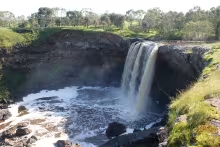
Spent three days in early spring exploring Kanawinka Geo Park region.
We visited Tower Hill near Warrnambool (VIC), Mount Gambier and Mount Schank (SA), Naracoorte Caves (SA), Nigretta Falls and Wannon Falls (VIC) and Byaduk Caves and Tumuli in Mount Napier State Park (VIC).
Please see more information by visiting links below.
(02.09.2013) Tumuli - Lava Blisters
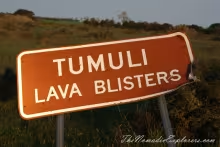
West of the Byaduk caves, near the limits of the Harmans Valley flow, are a number of unusual clusters known as Lava Tumuli or blisters. These unusual circular mounds or hummocks of rock, up to 10 metres high and 20 metres in diameter, were caused by the pressure of the liquid lava flow beneath the thin crust of the lava tubes. These lava domes are considered to be unique in Australia and most likely rare on a world scale.
Since most of the tumuli are on private ground, they are fenced it and can only be seen from some 100 meters away from Old Crusher Rd. It was not far away from Byaduk caves, so we decided to went there on our way to Melbourne.
(02.09.2013) Mount Napier State Park - Byaduk Caves, Mt. Napier
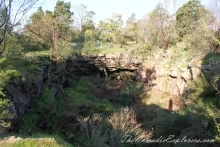
After visiting the Wannon Falls and the Nigretta Falls we went to the south from Hamilton town to the Byaduk Caves. The Byaduk Caves in Mt Napier State Park are the most extensive and accessible set of lava caves in Australia. Being so young (only 8000 years), they are largely unweathered and in their natural state. The caves are accessed through collapsed roof sections and display many well-preserved features left by the retreating and cooling lava. The largest tunnels are up to 18 metres wide, 10 metres high, and extend to depths of 20 meters below the surface.
Byaduk Caves are reached via the Byaduk Caves Road, 18 km from Hamilton on the Hamilton-Port Fairy Road.
(02.09.2013) Wannon Falls, Nigretta Falls
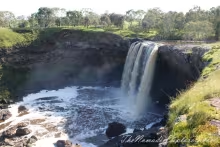
On our way back home we made a stop at the Wannon Falls and the Nigretta Falls lookouts. We were lucky to see these waterfalls in full flow. Both of them are located near Hamilton town. The area around Hamilton was known as Volcano Country. This was evident as we noticed traces of basalt formations in the lip of the falls providing the hard layer necessary for waterfall formation.
To get to waterfalls follow signs on Glenelg Hwy - both of them are well signed.